
May 15 – Jun 12
Remember We Must Live
Sea Dax
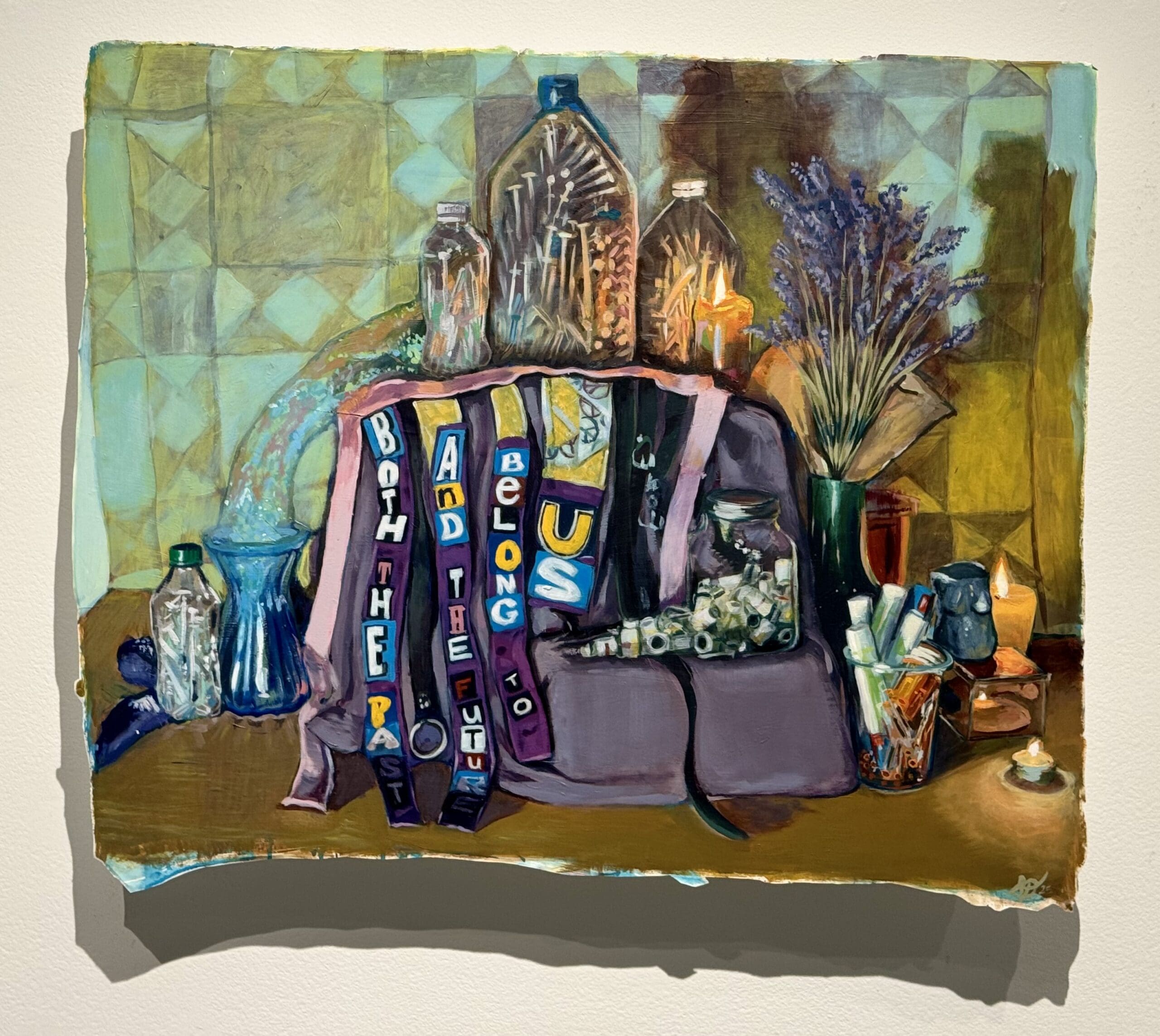
Sea Dax’s Remember We Must Live reimagines the tradition of memento mori; shifting its focus from the inevitability of death to the urgency of survival. In response to the ongoing erasure and demonization of trans lives, Dax blends contemporary symbols, personal iconography, and art historical structures to reframe remembrance as an active practice — asserting that survival, visibility, and archive-building are acts of resistance.
Opening Reception
Friday, May 15 | 6 – 8 pm
Location
CCAC’s Gallery
Gallery Hours
Mon/Wed/Fri: 10 am – 5 pm
Tue/Thu: 10 am – 8 pm
Sat: 10 am – 12 pm
Sun: closed
About the Artist
Sea Dax is an interdisciplinary artist and maker who currently lives and works in Cincinnati, Ohio. He acquired his BFA at the Art Academy of Cincinnati in 2012. Sea has exhibited at many galleries including Clifton Cultural Arts Center, Wavepool Gallery, the Contemporary Arts Center, and Artemesia Gallery in Windsor. Presently, he is a second year MFA candidate at the University of Cincinnati’s DAAP School of Art. He began showing his ever-evolving collection of works titled “trans[land]scapes” in 2024, which has continued into a dedicated trans still life project.
His current body of work engages art history as both a resource and an obstacle, focusing on the covert ways trans lives have been recorded (and often omitted) within art historical and broader cultural contexts. Because cycles of erasure and criminalization in the US have often rendered transness invisible (or visible with negative connotations), he studies queer archives for the intracommunal codes and symbols that persist and evolve across time, where marginalized people innovate ways to communicate that often slip past institutional record keeping, and where society has often edited trans people out completely. This line of research has led him to speculate what “trans still lives” could look like, uplifting transition detritus materials as sacred, and to invent trans codes and symbols of his own to utilize in contemporary still life creation. This line of inquiry also beckons the questions: What does it look like to conceptualize transness with reverence rather than spectacle? To see transition as historical and divine, rather than strictly medical/political or emergent?